
“I feel that I received high quality dental care at a competitive price. I would highly recommend Smilemakers.”
Cosmetic Dentures
Natural-looking dentures for aesthetic improvement
Cosmetic dentures are removable false teeth made of either acrylic (plastic) or metal. If you have lost your natural teeth, this cosmetic dental treatment can help to restore your smile.
The latest technology allows modern dentures to be made of flexible acrylic or with special attachments to greatly improve their fit, comfort, and overall appearance.
So, if you feel self-conscious about your smile or ill-fitting replacement teeth, our cosmetic dentures can be used to replace missing teeth with a secure fit and natural look.
Why struggle with uncomfortable or loose dentures when you could experience the latest denture technology and greatly improve your quality of life?
Discover the benefits of high-quality cosmetic dentures in Bursledon, Southampton, at Smilemakers, and book your new dentures appointment to get started.
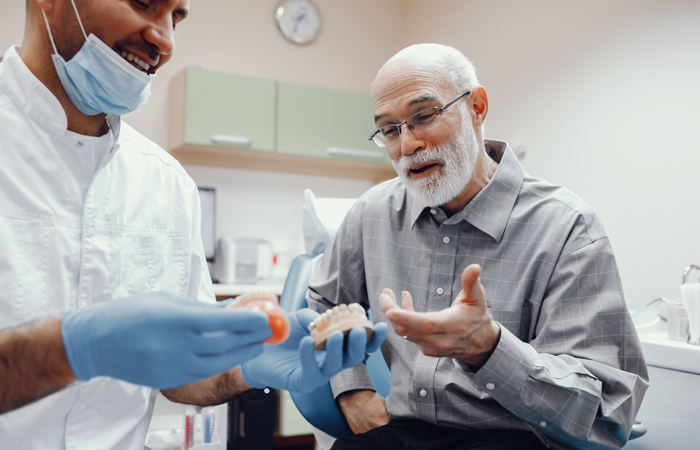
The first step to getting cosmetic dentures is to book an initial consultation, so the Smilemakers team can assess your oral health. We can then discuss which treatment would be best for you, based on the number of remaining teeth and your preferences.
We aim to help patients restore their smiles and bite function, but by providing secure dentures that look like natural teeth, this cosmetic treatment can also boost self-esteem and improve overall appearance – in turn, improving the patient’s quality of life.
After assessing your individual case, we will take a 3D scan so a dental technician can create your bespoke dentures in the dental lab, which can take a few weeks and several appointments. You will then come back for a fitting appointment, so any adjustments can be made before your final fitting.
Leaving you to enjoy your new smile with cosmetic dentures by Smilemakers!

During your initial consultation, we can determine whether you need:
A full denture will be fitted if all your upper or lower teeth need to be removed or you want to replace an old complete denture. They can be either metal-based or fully acrylic.
Full dentures require a number of visits to make and can take some getting used to. Their shape, fit, and comfort are very dependent on the quantity and quality of bone that you have left in your jaw, and the soft tissue and quantity and quality of saliva in your mouth.
Lower dentures can be more troublesome than upper dentures due to a lack of bone in the lower jaw, but if required, this can be addressed using dental implants to secure the denture.
For an extra-secure fit, be sure to ask your Smilemakers dentist about denture stabilisation with implant-supported dentures, which attach to dental implants inserted into the jawbone.
A partial denture is designed to fill in the gaps left by a few missing teeth. An upper or lower teeth partial denture is either a plastic or metal plate with several false teeth attached.
Creating special attachments for adjacent teeth to engage the denture can result in a cosmetic denture that looks fantastic and does not threaten to drop out of your mouth!
Please ask your Smilemakers dentist about which cosmetic denture option is best for you.
Flexible dentures are a recent invention and differ from traditional dentures in that their flexible acrylic allows a better shape and a more comfortable fit for many patients.
Thanks to the absence of any metal frame and the use of super-thin, but ultra-strong materials, there is no bulky feeling, and they blend in much better. Because they are so flexible, they function more naturally than traditional dentures when talking and chewing.
To learn more, please ask your Smilemakers dentist about flexible dentures.
Missing teeth can make people feel insecure and unable to eat certain foods, but as a form of cosmetic dentistry, denture treatment can provide a cost-effective solution.
Please contact us to book an appointment with Smilemakers, so we can help you find the right securely-fitting, natural-looking cosmetic dentures for your needs.
When you first start wearing dentures, you should eat soft foods cut into small pieces and chew slowly using both sides of your mouth.
Avoid chewing gum and any food that is very sticky, hard, or sharp-edged until you have gained confidence in safely biting and chewing with dentures. You can gradually start to eat other types of food until you are back to your old diet.
While you can eat most foods with dentures, you should never use toothpicks, as they can damage the false teeth and gum material.
When it comes to cleaning dentures, the general rule is brush, soak, brush. Always clean your dentures over a bowl of water or a folded towel in case you drop them, and brush your dentures before soaking to help remove any food debris.
Using an effervescent (fizzy) denture cleaner will help to remove stubborn stains and leave your denture feeling fresher. Always follow the manufacturer’s instructions, as some denture cleaners are not designed for metal dentures and vice versa.
Once you have soaked them in the denture cleaning solution, brush the dentures again (brushing the false teeth as you would brush your real teeth, being careful not to scrub too hard, as this may cause grooves in the surface).
Most dentists advise using toothpaste and a small to medium-headed toothbrush. Make sure you clean all the surfaces of the dentures, including the surface that touches your gums. This is especially important if you use any kind of denture fixative.
It is important not to use any type of bleaching product to clean your dentures. Bleaching can lead to weakening of the denture as well as making it look unsightly.
Additionally, only use cold water or lukewarm water to soak the denture. Using hot water can weaken the denture, causing it to crack or break.
Some people have sensitive gums and may need a softer lining made for their dentures. If you have one of these special linings, it is important to check with your dentist before using any cleaning products or fixatives, as some products can damage the lining.
Usually, you shouldn’t need to use a denture fixative if the dentures fit properly, as they will be custom-shaped to the contours of your mouth. However, if your jawbone has shrunk a lot, adhesive may be the only way to help retain dentures.
Fixatives should usually only be necessary for a short period of time if your dentures have become loose, while you wait for your replacement dentures.
If there are gaps and your denture is slipping, ask your dentist for advice, as a new denture may be recommended and could be provided within a few weeks.
It’s important to visit your dentist regularly, even if you don’t have any of your natural teeth left. Dentists don’t only check your teeth and gums, but also the soft parts of the mouth, including the tongue and cheeks.
These examinations are just as important, so the dentist can spot any infections, mouth conditions, or even the earliest stages of mouth cancer. Your dentist will be able to tell you how often you should visit for check-ups.
As your gums and jawbone shrink, even if cared for properly, your dentures will likely fit differently in the future. For this reason, you should see your dentist as soon as possible if your dentures:
You should also go to the dentist if you have signs of gum disease or tooth decay, such as bleeding gums, tooth pain, or bad breath.
We’re open Monday-Friday, and Saturdays by appointment only

“I feel that I received high quality dental care at a competitive price. I would highly recommend Smilemakers.”
“Smilemakers are the best dentist I’ve ever had, everyone from the reception to the dental nurse are friendly and helpful.”
“The service is excellent. The treatment is excellent. No way could I fault it!!!”